
It usually starts with something small. A bit more scalp showing through the parting than you remember. A crown that used to sit fuller. Hair that takes longer to look “done,” however you style it.
For a lot of women, this happens gradually enough that it’s hard to pin down when it began. It’s rarely one dramatic moment — more a slow sense that your hair isn’t quite behaving the way it used to.
A hair topper is one option worth understanding if you’re in this position. It’s a cosmetic piece designed to sit over an area of thinning and blend in with your own hair, rather than replacing it entirely. It won’t change what’s causing the thinning, but it can make a real difference to how your hair looks and feels day to day.
This guide walks through what actually matters when choosing one, so you’re working from information rather than guesswork.
What Is a Hair Topper?
A hair topper is a hairpiece that attaches to the top or crown area of the head, usually with clips, and sits directly over your own hair rather than under a full wig cap. Because it only covers part of the head, it tends to feel lighter and less noticeable than a full wig.
Toppers come in a wide range of sizes, base constructions, lengths, densities and textures. Some are small and designed for a specific patch of thinning. Others are larger and made to cover most of the crown and top of the head. There isn’t a single “correct” version — the right one depends entirely on what you’re trying to cover and how your own hair looks around it.
Where Do You Need Coverage?
This is really the starting point, before colour or texture come into it at all.
Thinning shows up differently for everyone. Some people notice it mostly along the parting, where scalp becomes visible in a narrow strip. Others see it concentrated at the crown, or spread more generally across the top of the head. A few people are dealing with wider thinning that touches several areas at once.
The size and shape of topper you need should match this pattern. A wider, more generalised area of thinning usually calls for a larger base. A narrow parting concern might only need a smaller, more targeted piece. It’s worth resisting the pull towards the biggest, most “complete” looking option by default — a topper that’s larger than necessary can end up looking like an addition rather than an extension of your own hair.
Choosing the Right Base
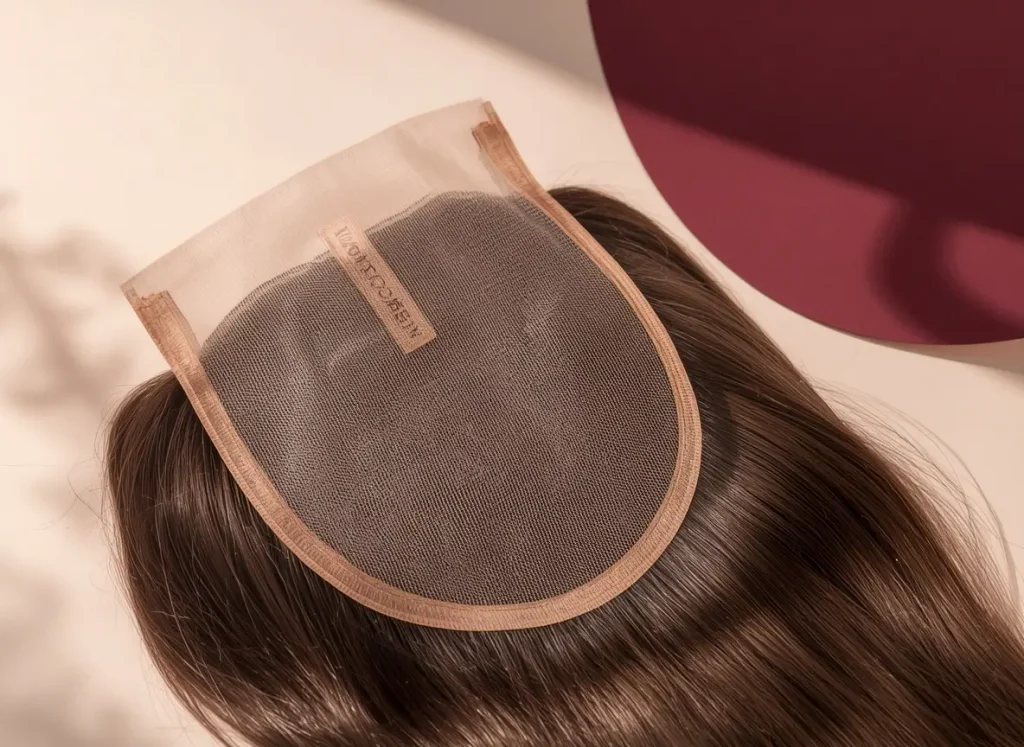
The base of a topper — the material it’s constructed on — has a big influence on how it looks and how it feels to wear.
Silk bases are designed to mimic the appearance of scalp, which can look convincing where the piece meets your natural parting. Mono bases (fine mesh) are breathable and tend to allow for flexible, natural-looking partings in different directions. Lace bases are lighter still and often used where a very fine, low-visibility finish is the priority, though they can require slightly more careful handling. Some toppers also use a thin polyurethane (PU) perimeter around part or all of the base, which can help with a secure, seamless edge.
Each of these has a different balance of scalp appearance, breathability, durability and styling flexibility. None is automatically “the best” — it depends on how much styling you do, how sensitive your scalp is, and how much time you want to spend on maintenance.
Getting the Colour Right
Colour matching is often underestimated. It’s tempting to pick the closest single shade from a chart and assume that’s enough, but real hair is rarely one flat colour.
Most people have some variation in their hair — subtle highlights, lowlights, a slightly different tone at the root, or a scattering of grey coming through. A topper that ignores this can end up looking noticeably separate from the rest of the hair, even if the base shade is close. Paying attention to undertone, and to how much grey blending or dimension your own hair has, makes a genuine difference to how convincingly the two blend together.
If you’re unsure, it’s worth taking a photo of your hair in natural daylight when discussing colour options, since artificial lighting can distort how a shade actually reads.
Choosing Length, Density and Texture
These three elements work together, and it helps to think about them separately before deciding as a whole.
Length should generally sit close to what you’d choose for your own hair, or slightly shorter if you’re blending it into existing layers. A dramatic change in length can draw attention to the join.
Density is where a lot of people go wrong, understandably reaching for the fullest option available. In most cases, a density that sits close to your natural hair looks more convincing than one that’s noticeably thicker. Extra volume can be added through styling once the base density feels balanced.
Texture — straight, wavy or curly — should reflect your natural pattern, or at least a pattern your own hair can be styled to meet somewhere in the middle. A very different texture is one of the quickest ways for a topper to look like a separate piece rather than part of your hair.
Human Hair or Synthetic?
Both have a place, and neither is universally the better choice.
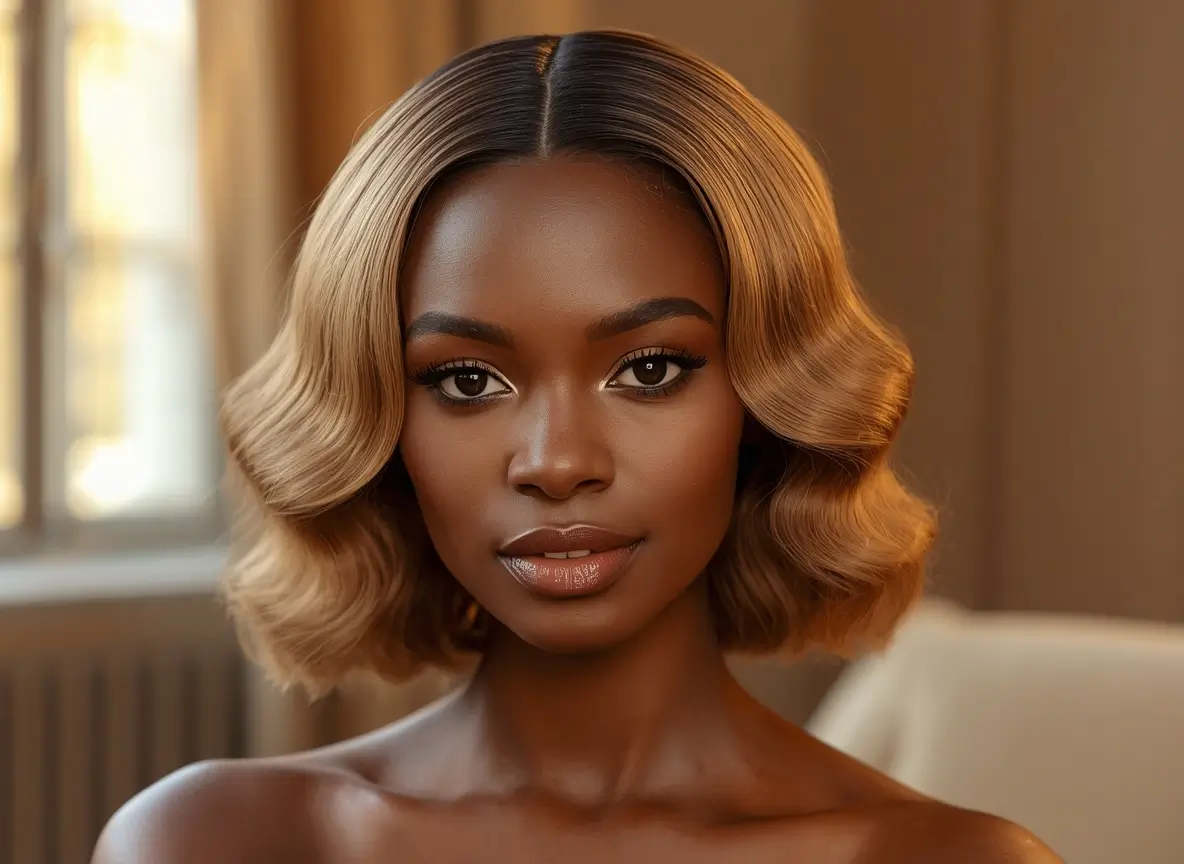
Human hair toppers tend to offer more styling versatility — they can generally be heat-styled, coloured within reason, and styled to move more like natural hair. This comes with more maintenance, since human hair needs washing, conditioning and care in much the same way your own hair does. It’s also typically a bigger investment.
Synthetic toppers usually hold their style with less daily effort and can be more budget-friendly, but they’re limited in how much heat or restyling they can tolerate, and the hair fibre itself doesn’t always move in quite the same way as human hair.
The right choice comes down to how much time you want to spend on styling and care, your budget, and how much flexibility you want from the piece.
How Should a Hair Topper Feel?
Appearance matters, but comfort is just as important if you’re going to wear something regularly.
A well-fitted topper should sit securely without feeling tight or heavy. The base shouldn’t dig in or pull, and it shouldn’t feel noticeable once you’ve been wearing it for a while. If you have a sensitive scalp, this is worth mentioning when choosing a base type, since some materials sit more gently against the skin than others.
If a piece feels uncomfortable within the first few wears, that’s usually worth addressing — whether that means adjusting the fit, the clips, or reconsidering the base — rather than assuming it will settle on its own.
When a Hair Topper May Not Be the Right Option
It’s worth being honest here. A topper is generally designed to add coverage or volume where there’s still a reasonable amount of surrounding hair, or a suitable area for the piece to attach to, depending on how it’s constructed.
For more extensive hair loss, a full wig or another hair replacement option is often a more practical fit than a topper. And if you’re experiencing hair loss that feels sudden, unexplained, or is causing you concern, it’s worth speaking to a GP before choosing a cosmetic option. Hair loss can have a number of different causes, and a healthcare professional is best placed to advise on that side of things — our role is simply to help with the cosmetic solution once you’ve had that conversation, if needed.
A More Personal Approach
At Replenish Extensions, we believe choosing a hair topper should begin with understanding what your own hair needs, rather than starting from a product and working backwards. Coverage, colour, base, density and texture all interact with each other, and getting a natural result usually comes down to how well those elements are considered together, not any single feature on its own.
We work with human hair toppers and hair enhancement pieces, and if you’re not sure where to start, our team is happy to talk through your options with you.
Finding the Right Fit
The right topper should feel like part of your own hair rather than something you have to think about all day. That’s really the test worth applying, more than any single spec on a product page.
Before choosing, it’s worth spending a little time thinking through where you need coverage, how your colour and texture vary naturally, and how much time you want to give to styling and care. Getting these right from the start makes a noticeable difference to the finished look.
If you’d like a hand thinking through coverage, colour or base type, do explore our Hair Toppers collection or speak to the Replenish Extensions team — we’re glad to help however far along this you are.